
Shore Power at the Dock: How to Meter and Bill Electricity to Yacht Guests

Ludvik Ludviksson
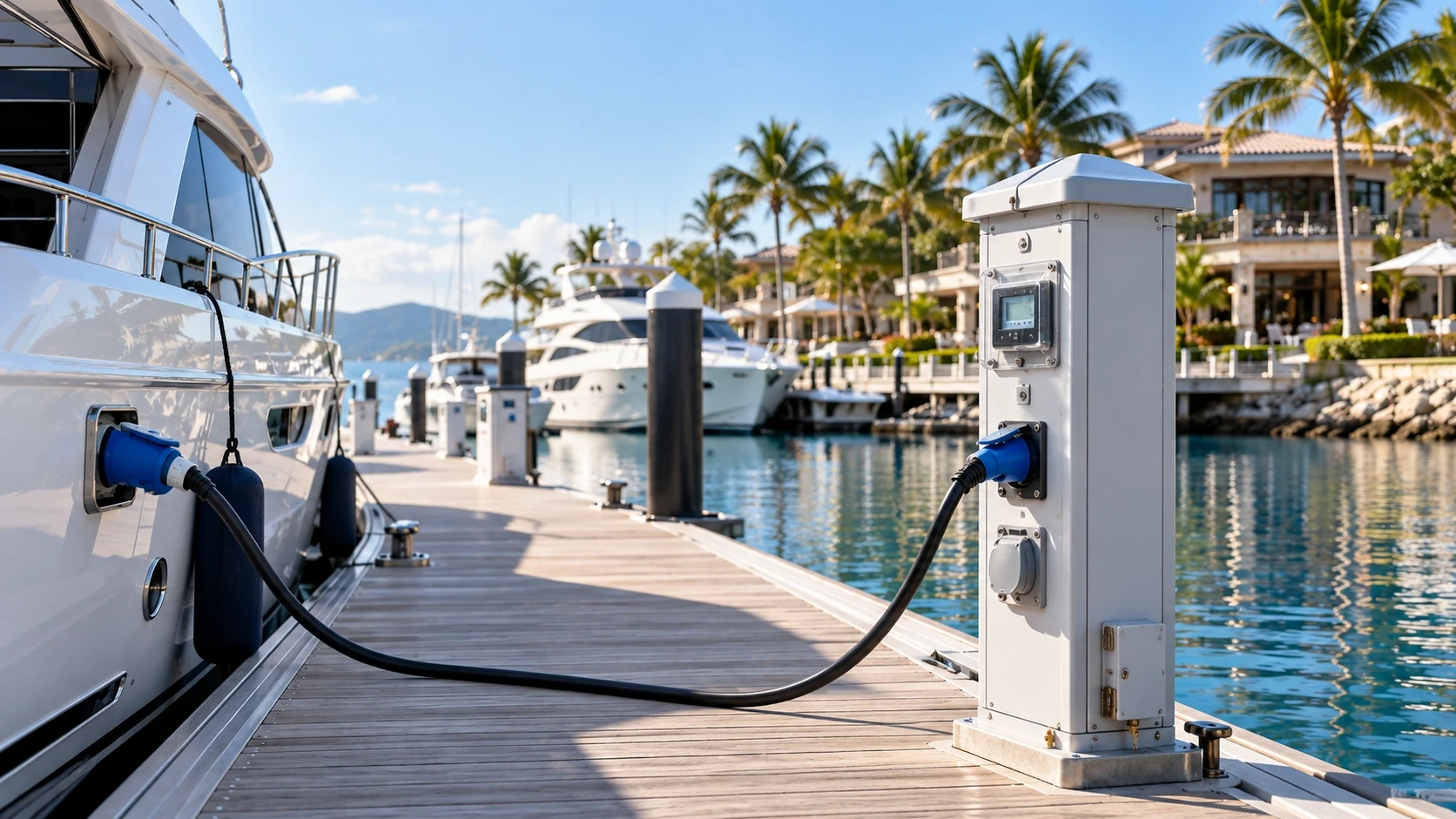
Shore power is metered and billed accurately by putting a meter on every pedestal, recording consumption per berth against the vessel using it, and turning that reading into a charge on a published tariff, so the guest pays for what they actually drew instead of accepting an estimate at checkout. Most resort docks still estimate, and estimating is what produces the awkward conversation with the guest who has the largest yacht and the largest bill. This guide covers the tariff decisions to settle first, how to run the metering, and how to keep every charge defensible.
Key Takeaways
Estimated power is one of the charges guests query most often, and metering removes the argument.
Consumption varies enormously by vessel, so a flat nightly fee makes light users subsidise heavy ones.
A defensible tariff needs a published rate per kilowatt hour, plus a decision on any standing charge or included allowance.
Check the local rules on recharging electricity before you set a rate, since they differ by country and by supply contract.
Automated pedestal metering removes the clipboard round and the transcription errors it causes.
A reading has to be tied to the berth, the vessel and the dates before it can be defended.
Showing the guest the reading and the rate ends most disputes before they start.
Reconcile what you billed against what the property bought, monthly rather than annually.
Air conditioning, heating and liveaboard use are where the recoverable money sits.
An estimate either absorbs your cost or annoys your best guest
An estimate is a guess presented as a bill, and it fails in both directions. Guess low and the property absorbs the difference as overhead, which quietly turns the dock into a subsidised amenity. Guess high and a high-spend guest questions the number, the concierge is drawn into a dispute that has nothing to do with hospitality, and the charge often gets written off to keep the relationship intact.
The uncomfortable part is that both outcomes look like the same line in the accounts. Unless the property compares what it billed against what the pedestals actually delivered, an estimate-based dock cannot tell whether it is losing money on power or irritating its best guests, and it is usually doing both at once.
A yacht's consumption varies far more than a hotel room's
Rooms draw within a narrow band, which is why accommodation charges bundle electricity and nobody argues. Vessels do not. A small sailing yacht plugged in overnight to keep a fridge and a battery charger running draws a fraction of what a large motor yacht draws with air conditioning across several cabins, heating in shoulder season, and systems running while the crew stays aboard.
That spread is why a flat nightly power fee is difficult to defend at a resort dock. The owner of the small yacht is paying for someone else's air conditioning, and the owner of the large one is getting a discount the property never intended to give. Metering replaces a cross-subsidy with a charge each guest can check for themselves.
Settle four tariff decisions before you buy any hardware
The metering is the easy part. The pricing decisions are what people argue about later, so settle them first. The rate per kilowatt hour should be published, because a rate the guest can see in advance is far easier to defend than a number that appears on departure. Then decide whether the berth rate includes a small daily allowance with metering above it, which suits properties whose guests are mostly overnight visitors, and whether a standing charge recovers the cost of having the pedestal available separately from what flows through it. Finally, agree with finance whether the rate recovers cost or adds a margin, and apply that consistently across the dock.
Long stays need their own answer. Seasonal berth holders and anyone living aboard should be billed on a cycle rather than presented with a single figure at the end, both because the amount becomes large and because a monthly reading is far easier to query while the boat is still there. Before setting any rate, check the local rules on recharging electricity to a third party, since they vary by country and sometimes by the terms of your own supply contract. That is a question for your finance team or a local adviser rather than something to copy from another property.
Automate the reading, because the clipboard round is where errors enter
Manual metering means someone walks the pontoon, writes numbers down, and types them in somewhere else. Each of those steps loses accuracy, and the round usually happens at the least convenient moment, which is departure. Missed readings become estimates, and estimates become the dispute described above.
Smart pedestals that report consumption remove the round entirely. The reading arrives against the berth, the charge is calculated on the published tariff, and nobody has to reconstruct what a meter said three days ago. Harba handles this through metered shore power, with consumption recorded per pedestal and billed automatically as part of the dock's own charges.
A reading is only defensible when it names the berth, the vessel and the dates
A pedestal reading on its own proves consumption happened, not who owes for it. Between two arrivals the same pedestal may serve different vessels, and a boat that moves berth mid-stay will otherwise leave its consumption split across two records with nothing joining them.
What makes a power charge stand up is the unbroken chain from berth to vessel to dates to reading to charge. When that chain lives in one operational record, the property answers a challenge in seconds. When it lives across a berth plan, a meter book and an accounting system, answering the same challenge takes an afternoon and often ends in a credit.
Guests settle power at the dock by card, or on account if they hold a berth
Metering produces a number, and the property still has to collect it. At the dock the practical routes are settlement by card at the point of departure, or accrual to a berth account for a holder who is invoiced on a cycle. Both work without touching the system that runs your rooms, and both let a departing guest pay in seconds rather than queueing at reception.
Some properties also want dock charges to appear on the guest's room bill, which depends on the property management system in use and on how your finance team reconciles. That is a fair question to put on the table, and the routes a dock charge can take to reach a guest are set out in the guide to dock charges and the guest folio.
Show the guest the reading, the rate and the arithmetic
Most power disputes come from opacity rather than from the amount. A guest presented with a single figure has nothing to check and no reason to trust it. A guest shown a start reading, an end reading, a published rate and the multiplication has very little to argue with, and the conversation ends in seconds.
This is a small operational habit with a large effect on how the dock feels. It also protects the property, because a charge that was visible and explainable at the time is far harder to dispute afterwards.
Compare kilowatt hours billed against what the property's supply delivered
The last step is the one properties skip. Compare the kilowatt hours billed across the dock with the consumption recorded on the property's own supply for the marine circuits. A persistent gap means power is being consumed and not charged, whether through unmetered pedestals, missed readings, or vessels connected outside a recorded stay.
Doing this monthly turns power from an assumption into a managed line, and it gives finance something to reconcile against the property accounts alongside rooms, food and beverage and spa. The wider version of that argument is in the guide to growing revenue the PMS never captured.
Work out what your own dock is giving away in unbilled electricity
Once consumption is visible, the commercial question becomes answerable: how much electricity is the dock delivering that nobody is charging for. That depends on your tariff, your vessel mix and the length of your season, so it is worth modelling on your own figures rather than a benchmark. A worked model is set out on the page about shore power metering and billing for resort docks, which you can rebuild with your own rate and pedestal count.
Meter your highest-load pedestals first, then publish the rate
Start by publishing a rate per kilowatt hour and deciding on allowance and standing charge, because those decisions govern everything the metering then produces. Meter the pedestals serving your largest vessels first, since that is where both the consumption and the disputes concentrate. Tie every reading to the vessel and the dates, show guests the arithmetic at the point of payment, and reconcile monthly against the property's own supply.
To see metering and billing running against your own pedestals and tariff, book a demo and bring your current power rates and berth layout to the call.
Frequently Asked Questions
1. How do you bill shore power at a resort dock, per kilowatt hour or as a flat fee?
Bill it per kilowatt hour from a meter on each pedestal. The defensible method is a published rate, a reading recorded against that vessel and stay, and a charge calculated from actual consumption. A flat nightly fee is simpler to administer and much harder to defend once vessel sizes vary, because light users end up subsidising heavy ones. Tariff variations such as an included allowance or a standing charge are covered on the shore power metering and billing page.
2. Should electricity be included in the berth rate or metered separately?
Meter it separately once vessel sizes vary. Bundling works when consumption is predictable, which is true of hotel rooms and not of yachts, since a large motor yacht running air conditioning can draw many times what a small sailing yacht uses overnight. A bundled rate leaves the property absorbing the difference and the smaller boats paying for the larger ones. Some docks take a middle route, including a modest daily allowance in the berth rate and metering above it.
3. How do you set a shore power rate per kilowatt hour for a hotel marina?
Start from what the property pays for electricity, then decide with finance whether the dock rate recovers that cost or adds a margin, and publish the result before the season. The rules on recharging electricity to a third party differ by country and sometimes by the terms of your own supply contract, so confirm the position with your finance team or a local adviser rather than copying another property's rate.
4. How do you stop yacht guests disputing shore power charges at checkout?
Publish the rate in advance, meter rather than estimate, and show the guest the start reading, the end reading and the calculation at the point of payment. Disputes come from opacity rather than from the amount, so a charge the guest can check is rarely challenged. Tying each reading to the vessel and the dates also means a query can be answered immediately rather than investigated later.
5. Can yacht guests pay for shore power at the dock by card?
Yes, by card at the dock or on account for a berth holder invoiced on a cycle, so a departing guest does not need to visit reception. Whether dock charges can also appear on a guest's room bill depends on the property management system in use, and the routes a charge can take are set out in the guide to dock charges and the guest folio.
6. How do you bill shore power for liveaboards and seasonal berth holders?
Bill them on a cycle rather than at departure, usually monthly and alongside the berth invoice, because consumption accumulates for months and a single figure presented at the end is both a shock and a credit risk. Read the meters on the same cycle as the berth charge and show the consumption next to it. Anyone staying aboard through a hot or cold season will be among your highest consumers, which is exactly why an estimate is the wrong instrument for them.
Relaterede blogs
More guides for resort and marina operators