
What is marina management software? (and why your hotel’s marina needs it in 2026)

Ludvik Ludviksson
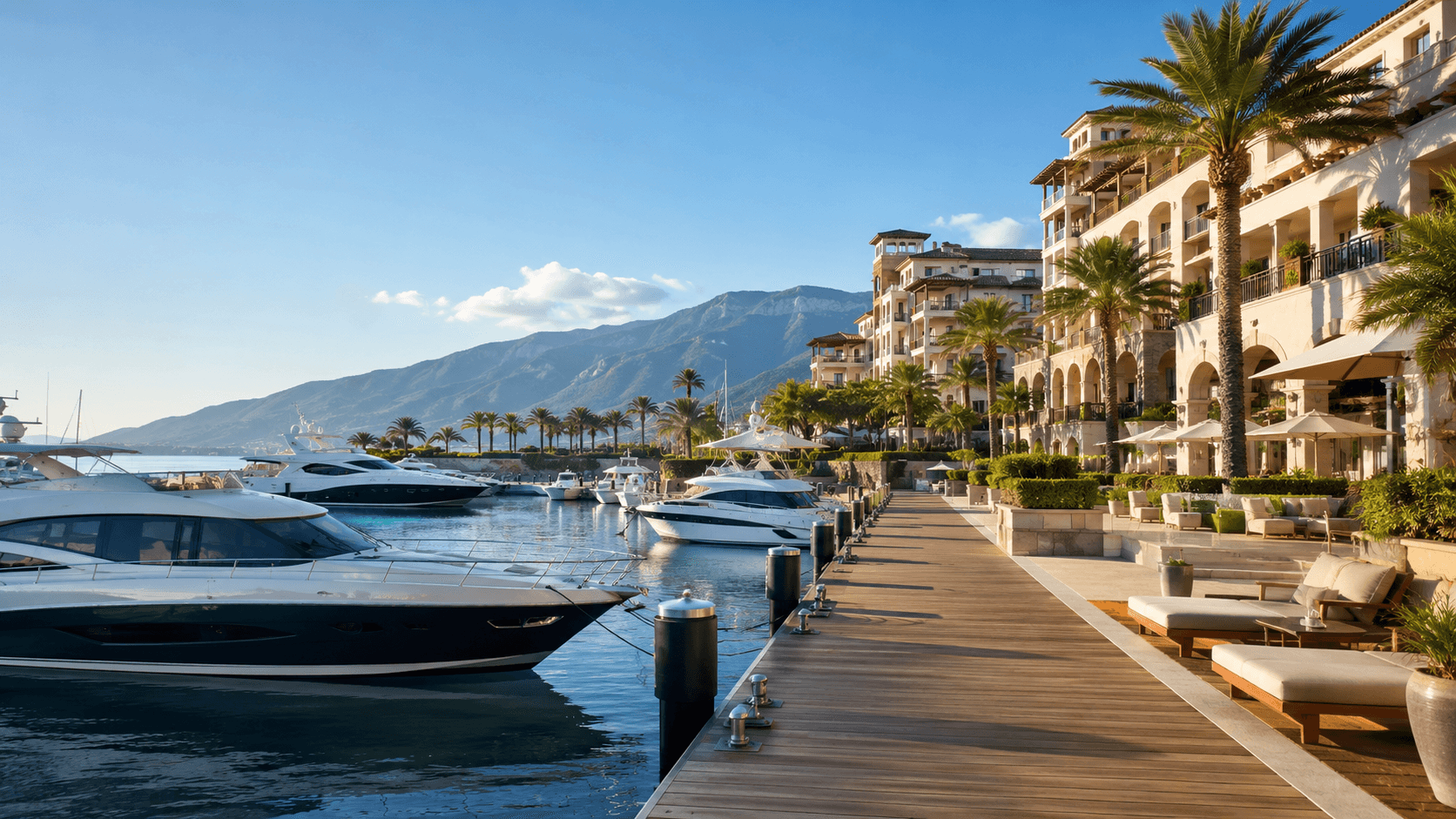
Marina management software or marine-amenity management software, as it is more precisely described for resort and hotel properties is a dedicated operating platform that gives luxury resorts and hotel chains one system for moorings, day berths, vessels, bookings, guest records, payments, and dock-side operations alongside their existing PMS. As resort guest expectations continue to rise in 2026, digital tools have become essential for delivering a professional guest experience at every dock touchpoint, capturing ancillary revenue cleanly and replacing the manual processes that create friction at peak season. Modern platforms like Harba replace spreadsheets and disconnected workflows with real-time berth management, online booking, integrated payments and operational visibility, giving property teams the tools to run the marine amenity with the same rigour their PMS gives the room.
Key Takeaways
Marine-amenity management software gives luxury resorts a dedicated operating system for the dock the gap a standard PMS was never designed to fill.
It centralizes berth allocation, bookings, guest records, payments, invoicing and reporting in one platform.
Replacing spreadsheets and manual processes reduces operational errors, duplicate work and missed revenue opportunities.
Online booking, automated confirmations and digital payments create a smoother experience for yacht-owning resort guests and visiting boaters.
Real-time berth availability helps property teams maximize occupancy and optimize peak-season capacity.
Integrated CRM features provide complete guest and vessel histories for more personalized dock-side service.
Luxury resorts and hotel properties can run the dock with the same rigour their PMS gives the room, using dedicated marine-amenity management software for the operations their property management system was never designed to handle.
A unified database keeps property staff and boaters working from the same accurate information, reducing communication issues.
Modern platforms support additional operations such as electricity metering, dry stack storage, dock-side guest services and ancillary revenue management.
Secure handling of guest information and alignment with modern data protection expectations are increasingly important for resort operators and hotel chains.
Marina management software is a purpose-built operating system for running the dock. For resort and hotel properties, it fills the gap between the PMS that runs the room and the dock operations the PMS was never designed to manage. It helps property teams manage berths, customers, vessels, bookings, payments, invoices, maps, communication and reporting from one reliable place, instead of asking staff to keep the season moving through spreadsheets, paper notes and disconnected tools.
In 2026, that matters for two reasons. First, resort guests now expect the same clarity they get from hotels, airlines and restaurants: fast booking, clear payment, accurate arrival details and a staff team that already knows what is happening. Second, resort operators and hotel groups with moorings are under pressure to protect revenue, reduce friction and make every berth count during peak season.
For standalone marinas, the category is usually called marina management software. For luxury resorts and hotel groups, the more accurate lens is marine-amenity management. The property has a PMS for the room. It still needs an operating system for the dock. That is the gap Harba is built to close through the HarbaMaster platform, guest booking flows, payments, customer records and boater-facing tools.
What does marina management software do?
At its simplest, marine-amenity management software gives your property team a shared view of the dock. Instead of checking one spreadsheet for berth allocation, another system for payments and a notebook for guest requests, staff can work from a single operational cockpit.
The core functions usually include berth management, reservations, vessel records, guest profiles, invoicing, online payments, marina maps, staff communication and reporting. Better systems also support guest self-booking, upsell opportunities, access-related information and integrations with accounting workflows. For property GMs comparing the category for the first time, Harba's management software guide is a useful starting point.
The main benefit is control. Your team can see who is arriving, which berths are available, who has paid, what services were ordered and which guest needs follow-up. That control is valuable on a quiet weekday, but it becomes critical during peak season when a small error can affect staff, revenue and guest experience at the same time.
For resort properties, the logic is identical to the rest of the property. The room is managed in a professional PMS, while the dock managed in Excel creates an uneven guest experience. A yacht-owning guest does not care which system failed in the background. They remember whether the arrival felt polished.
Why 2026 changes the conversation
Digital expectations have moved fast. The European Commission's Digital Decade policy points toward wider digital adoption across businesses, public services and everyday life. That wider shift affects resort marine amenities directly. Guests who arrive by yacht are already used to mobile booking, online payment and instant confirmation in other parts of their travel journey.
This makes manual dock operations harder to defend. A long-standing berth holder may tolerate an old process because they know the staff. A resort guest, a visiting skipper or a yacht-owning visitor will be less forgiving. They expect the property to know the booking, confirm the berth, take payment cleanly and communicate without confusion.
The second change is commercial. Berths, moorings, electricity, access, storage, services and add-ons all carry revenue potential. When those items are managed manually, revenue can leak through missed charges, unclear ownership, delayed billing and weak reporting. When they are managed through a connected system, the property can see what happened, attribute it to the marine amenity P&L line and charge for it correctly.
That is why marine-amenity management software in 2026 should be judged as a guest-experience investment first and an operational tool second. The real question is whether it helps the resort deliver guest-grade service at the dock while keeping the revenue line clean.
The real cost of running the dock on Excel
Excel is often the real incumbent. It feels flexible, everyone knows how to open it, and it can carry a resort dock operation through early growth. The trouble starts when the dock becomes too important to the guest experience for one file to hold the truth.
A spreadsheet does not automatically know when a guest pays. It does not update a marina map by itself. It does not warn the concierge that two people are looking at different versions. It cannot give the GM, F&B Director or marina manager a clean view of mooring revenue without manual work. Harba's software consolidation guide covers this broader problem for properties using too many disconnected tools.
The risk is largest in luxury hospitality settings. A resort can have excellent rooms, restaurants and concierge service, then still look underprepared when a yacht guest reaches the dock. If the concierge has to call three people to confirm a berth, or if mooring payment is handled outside the normal reporting rhythm, the dock becomes the weak link in the property experience and the one a high-spend guest is most likely to remember.
Moving away from Excel does not mean removing human judgment. It means giving staff better information so their judgment can be used where it matters: guest handling, berth decisions, service recovery and ancillary revenue opportunities.
For most resort and hotel operators, the path from a parallel spreadsheet to PMS-grade marine operations takes one season. From parallel Excel to PMS-grade marine ops in one season: that is the transition Harba is built to deliver.
Core features to look for
A good marine-amenity platform starts with berth management. Property teams should be able to see availability, assign spaces, check vessel details and understand occupancy without guessing. A visual marina map makes this much easier because the dock layout becomes part of daily decision-making.
Booking and guest management come next. Resort guests and visiting boaters should be able to request or book a berth, receive clear instructions and pay without a long email chain. Harba's booking software guide explains why self-service booking matters for modern operations, especially when guest demand changes quickly.
Speed matters here. Oban Marina in Scotland reduced vessel check-in time from 20 to 30 minutes per vessel down to under 5 minutes after switching to Harba, which also removed the need for a dedicated reception during peak season.
Payments and invoicing are another essential layer. The system should help the property team charge for stays, subscriptions, services and extras with less manual reconciliation. For resort properties, this matters because mooring revenue should be visible, attributable and easy to reconcile against the wider property P&L. Peter Leonard Marine in England moved from an invoicing process that took days to one that now takes minutes.
A strong CRM is also important. A resort dock needs more than a name and email address. Staff may need vessel dimensions, contact preferences, contract details, prior visits, payment status and notes from earlier conversations. When that information sits in one place, guest service becomes more consistent.
Finally, communication tools should support the way boaters actually move through the property. Arrival details, payment reminders, service options, weather updates, service information and operational notices all need to reach the right people at the right time.
The resort angle: PMS for the room, Harba for the dock
Luxury properties already understand operating systems. The room has a PMS. F&B has its own systems. Spa, events and housekeeping usually have structured processes. The dock often sits in between: important to the guest experience, valuable to the property, but handled through parallel admin that was never designed for high-touch hospitality.
That gap becomes visible at the worst moments. A guest with a large yacht asks the concierge for a berth. A day mooring needs to be billed correctly. A visiting boater expects to pay by card or phone. The GM wants to understand ancillary revenue from the marine amenity and attribute it to the property P&L. If the dock is still running on a spreadsheet and a cash-box habit, the property feels less polished than it should.
Harba's positioning is direct: PMS for the room. Harba for the dock. Built for the way luxury hospitality actually runs, the goal is to run the marine amenity with the same rigour as the rest of the property, while keeping the operator in control of the guest journey.
That does not make Harba a PMS replacement. It sits alongside Opera, Mews, Cloudbeds or your chain's internal stack and handles what the PMS was never designed to manage: berths, moorings, vessels, marine payments, dock-side guest flows and boater-facing service.
One database for operations and boaters
Many marina tools focus on the office. Some boater apps focus on the guest. The stronger model connects both sides. A booking, check-in, payment or service request should not create separate truths for staff and boaters. It should update the operational record and the guest-facing journey at once.
This is why one database matters. If the property team sees a berth as available while the boater sees something different, trust breaks down. If payment is received but the front desk cannot see it quickly, staff waste time chasing something already settled. If guest details live outside the main system, the next visit starts from zero again.
Harba's product structure supports this connection through HarbaMaster, HarbaGuest, HarbaApp and HarbaPOS. For the resort operator, that means berth data, CRM, payments and maps are part of the same working environment feeding into the same reporting view as the rest of the property. For the boater, it means booking, paying and accessing services can feel simpler.
This also supports ancillary revenue. If products, services or add-ons can be presented during the guest journey, the resort can make relevant offers without turning every interaction into a manual sales process. On the Harba site, this is closely tied to guest payments and service add-ons.
Power, storage and the wider dock operation
A modern resort dock operation often extends beyond berth allocation. Electricity usage, dry storage, crane scheduling, rack assignment and service products all affect the business. If these areas sit outside the main operating view, staff have to stitch the day together by hand.
Power is a good example. Manual meter reading can create disputes, billing delays and unclear usage records. HarbaPower gives properties options for live metering, remote control and automatic billing through smart power tools. For resort operators with paid electricity, this can turn a slow back-office task into a clearer revenue process.
Dry stack facilities and boat storage yards bring another layer of complexity. Rack assignments, launches, haul-outs and customer messaging all need coordination. Harba's dry stack tools are relevant for operators that manage boats outside the water as well as at the berth.
The point is simple: the dock is rarely one workflow. It is a collection of connected moments. The right software keeps those moments from drifting apart and from drifting away from the guest-experience standard the rest of the property has set.
Data, trust and security expectations
Marine-amenity management systems handle personal data, payment-related information, vessel details and operational records. That makes data handling a board-level and procurement-level concern, especially for hotel groups and chain properties.
The European Commission's EU data protection guidance states that data protection is a fundamental right under EU law, with GDPR forming a major part of the legal framework. Property operators and chain procurement teams do not need every staff member to become a legal expert, but they do need to treat customer data with care and choose vendors that can answer serious procurement questions clearly.
Cybersecurity expectations are also rising. The EU's NIS2 Directive created a wider framework for network and information system security across critical sectors. A resort dock operation may or may not fall under a specific rule depending on its structure and country, but the direction is clear: digital operations require serious handling of systems, access and risk.
For chain procurement buyers, this means asking practical questions. Who can access customer data? What permissions can staff have? How are payments handled? What happens if a staff member leaves? How easy is it to export or clean data? A credible vendor should welcome those questions.
How to choose the right system
Start with the operational pain, not the feature list. If your dock creates guest-experience friction or mooring revenue is not being captured cleanly, those are the first workflows to fix. If bookings create confusion, focus on reservations, confirmation and berth allocation. If the issue is reporting, look at how the system handles ancillary revenue, occupancy and guest data.
Then look at fit. A resort property with a smaller number of moorings may need guest-grade berth management, payments and guest records. A larger marina amenity may need accounting workflows, guest self-service, messaging, power metering and more structured reporting. A hotel chain may need chain-level deployment and PMS-adjacent integration.
Pricing should be evaluated against the value of the dock to the property, not the subscription cost in isolation. Harba's pricing plans show different levels for different operational needs. The right plan should reflect the value of the marine amenity, the size of the operation and the level of support required. A resort that relies on peak-season mooring revenue should judge cost against missed billing, staff pressure and guest friction, rather than subscription price alone.
Proof matters as well. Before choosing software, review customer cases, ask how onboarding works, and check whether the vendor understands the realities of your type of property. A yacht club, municipal marina, private harbor and luxury resort do not all run the same way.
What implementation should feel like
Good implementation should be calm, structured and honest. The vendor should help you map existing processes, clean up core data, prepare staff and decide which workflows move first. The goal is not to digitize every habit from day one. The goal is to make the important workflows reliable, then build from there.
For most resort operators, the first priorities are berth data, guest records, booking, payments and invoicing. Once those are stable, the property team can add reporting, add-ons, power metering, more advanced guest communication or storage workflows.
Training also matters. Staff should understand the system well enough to trust it during busy periods. A platform can have excellent features, but if the team does not use it consistently, the old spreadsheet will creep back into the process.
The best implementation partner should not make the property feel small for having old processes. It should help the team move with confidence from familiar workarounds to a cleaner operating rhythm the same standard already applied to every other part of the property.
Why your hotel marina needs a proper marina management system in 2026
Your resort needs marine-amenity management software in 2026 if the dock has become too important to the guest experience to run from scattered files, memory and manual payment checks. The same is true for any hotel property where moorings, day berths or yacht arrivals are part of the guest experience. When the dock affects ancillary revenue and the property's reputation, it deserves proper operational control.
The right system gives your property team a shared view of berths, guests, payments, customer data and services. It helps staff answer faster, charge more accurately, communicate more clearly and make better use of peak season. For yacht-owning resort guests, it makes the dock feel more professional from first booking to final payment.
Harba's role is to be the operating system for the dock: practical, calm and built around the way marine-amenity teams at luxury properties actually work. If your current setup depends on Excel, disconnected tools or one person who knows where everything lives, 2026 is the right time to take the helm and move to a system that can carry the next season properly.
Frequently Asked Questions
1. What problems does marine-amenity management software solve for resort properties?
Marine-amenity management software brings berth allocation, bookings, payments, guest records and staff communication into one shared system purpose-built for the dock operations a standard PMS cannot handle. It helps property teams avoid scattered spreadsheets, manual checks and unclear information during busy peak-season periods.
2. Why is Excel no longer enough for resort dock operations?
Excel can work for simple operations, but it does not update bookings, payments, berth maps or guest records automatically. As the marine amenity grows in importance to the property's guest experience and P&L, spreadsheets create confusion, missed charges and unreliable reporting especially when the one person running the dock spreadsheet leaves before peak season.
3. How does marine-amenity management software improve the guest experience?
It makes booking, arrival, payment and communication clearer for yacht-owning resort guests and visiting boaters. Guests receive faster confirmations, better instructions and a dock experience that matches the standard they expect from the rest of the property.
4. Why should resorts and hotels use dedicated marine-amenity management software instead of extending their PMS?
A hotel PMS manages rooms it is not built for berths, vessels, moorings or dock-side payments. Dedicated marine-amenity management software runs alongside Opera, Mews, Cloudbeds or your chain's internal stack and handles what the PMS was never designed to manage, without replacing it.
5. What features should a marine-amenity management platform include?
A strong platform should include berth management, visual marina maps, bookings, guest and vessel records, payments, invoicing, reporting and guest communication. Larger resort operators may also need power metering, storage workflows and accounting support.
6. How can marine-amenity software protect mooring revenue during peak season?
It helps property teams track bookings, services, payments and add-ons more accurately. This reduces missed charges, delayed billing and mooring revenue leakage when the dock is busiest and ensures the marine amenity contributes a clean, attributable line to the property P&L.
Related Blogs
More guides for resort and marina operators