
Pre-Season Readiness at the Dock: The 20 Checks to Run Before the Season Opens

Ludvik Ludviksson
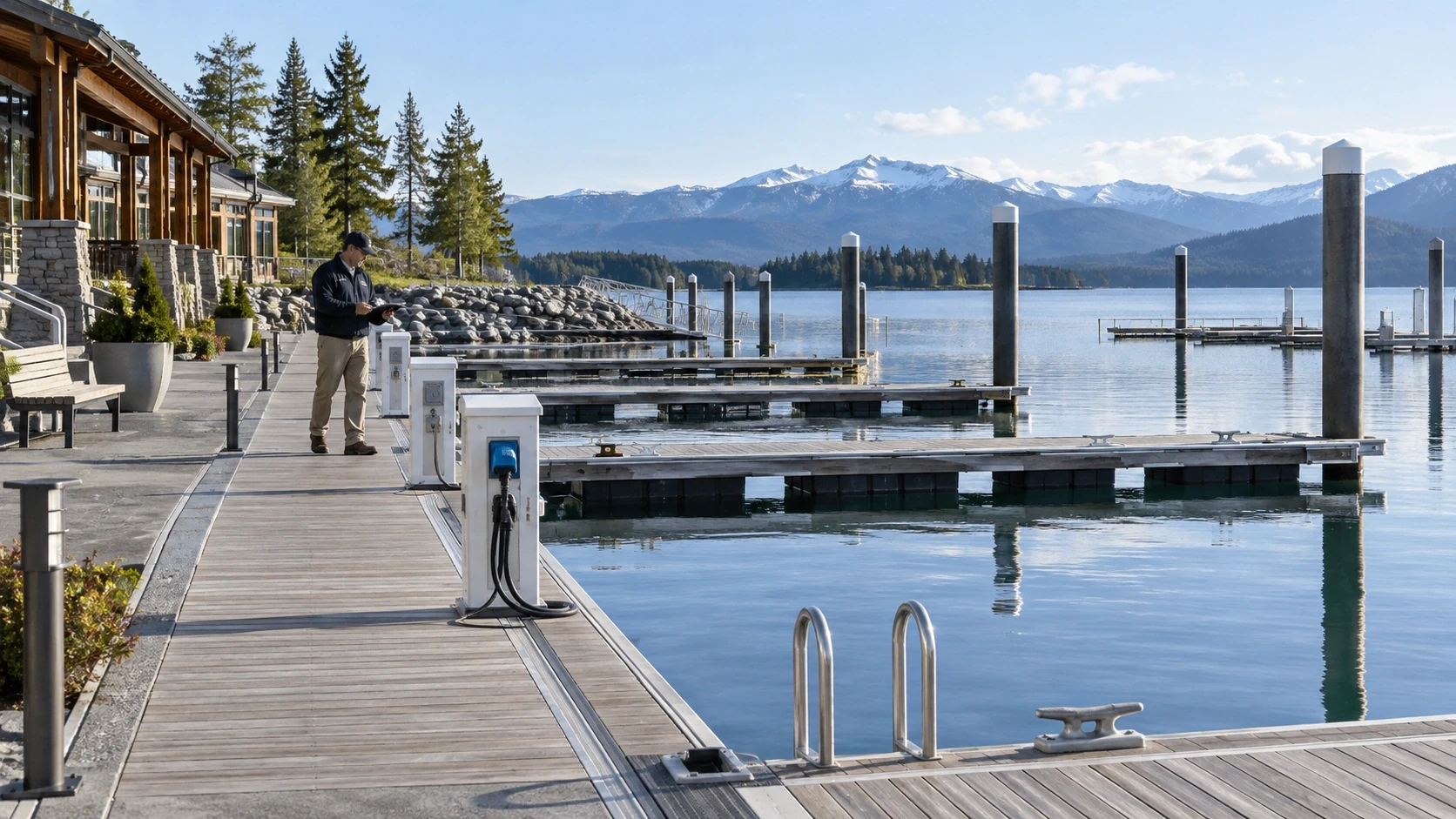
The work that decides how your dock performs in August happens in the quiet weeks before the season opens, and it comes down to twenty checks across five areas: your records, your berths, your utilities, your billing and your team. Many of the problems a busy dock complains about in peak season come down to readiness rather than capacity, and were fixable in the off-season. Run these checks in order, because each area depends on the one before it, and the whole exercise takes a few days rather than a project.
Key Takeaways
Clean berth and vessel data is the foundation, because every later check reads from it.
Verify berth dimensions physically rather than trusting a plan drawn years ago.
Confirm every seasonal contract and renewal before the season rather than during it.
Test each pedestal and meter while the dock is empty and access is easy.
Publish this season's tariffs, including power, before the first arrival.
Run a full test transaction through billing and payment, end to end.
Decide how after-hours arrivals are handled before the first one happens.
Agree who owns each decision at the dock when the pontoon is busy.
Train the team before peak, since adoption is what makes the system hold.
Set the reporting you will actually read weekly, and check it produces numbers.
Checks 1 to 4: Clean the berth, vessel and guest records the whole season reads from
Start with data, because allocation, billing and reporting all read from it. Check 1 is a full export and review of your berth list, confirming every berth exists, is usable this season, and has an owner or a status. Check 2 is the vessel and guest records: remove duplicates, fill in missing contacts, and correct lengths that were entered from memory rather than from paperwork.
Check 3 is the digital berth map itself, which should match the pontoon as it stands today rather than as it stood two seasons ago, including any berth that was reconfigured or taken out of service. Check 4 is last season's unresolved items: charges never billed, deposits never returned, and boats recorded as present that left months ago. Clearing these now stops them surfacing as disputes in July. If the records are in poor shape, the wider sequence for fixing them is in the guide to moving a resort dock off Excel in 90 days.
Checks 5 to 8: Measure the berths against the pontoon as it stands today
Check 5 is measuring, or at least spot-checking, the berths you rely on for larger vessels. Plans drift from reality after repairs and reconfigurations, and a berth sold as suitable for a 20 metre yacht that is actually 18 metres of usable length is an expensive error to discover with a boat alongside. Check 6 is depth at low water for the berths you market to deeper-draft vessels, which changes with silting.
Check 7 is the physical condition of cleats, ladders, fenders and pontoon surfaces, recorded as a list with owners and dates rather than as a mental note. Check 8 is confirming which berths are genuinely available for allocation this season, once contracted holders, maintenance and any reserved capacity are accounted for. With those four done, automated allocation has accurate constraints to work with, which is what the guide to automating berth allocation covers in detail.
Checks 9 to 12: Test every pedestal and set this season's power tariff
Check 9 is a pedestal-by-pedestal test: every socket energises, every meter reports, and the readings look plausible rather than stuck. Doing this with an empty pontoon takes a morning, while doing it in July means working around moored vessels. Check 10 is comparing each meter's opening reading against your records, so the season starts from a known baseline you can reconcile against later.
Check 11 is water, waste and any pump-out equipment, tested rather than assumed. Check 12 is your power tariff for the season: the rate per kilowatt hour, any included allowance and any standing charge, agreed with finance and published before the first guest arrives. Setting the tariff and testing the metering are separate jobs, and the tariff decisions are the ones that cause arguments later, which is why the guide to metering and billing dock electricity deals with them first.
Checks 13 to 16: Publish the rates, then run a live booking, charge, invoice and correction
Check 13 is publishing this season's berth and service rates everywhere they appear, including any booking channel, so nobody is quoting last year's numbers. Check 14 is a full test transaction: create a booking, add a power charge and a service, raise the invoice, take a payment, then confirm the record and the reporting reflect it correctly.
Check 15 is the same test for a correction, since credit notes and amended charges are where billing usually breaks, and you want to know the behaviour before a guest is standing there waiting. Check 16 is recurring billing for seasonal holders: confirm the schedule, the rate changes and the renewal dates are all loaded, so the first cycle runs without manual intervention. The mechanics behind this are in the guide to eliminating manual billing.
Checks 17 to 20: Decide who meets the boat, who owns each call, and who is trained
Check 17 is the arrival flow itself, walked through as a guest would experience it: how a booking is made, what the confirmation says, who meets the boat, and how the guest pays. Check 18 is after-hours arrivals, which need a decided answer rather than an improvised one, whether that is self-service booking and payment or a named person on call.
Check 19 is ownership: who allocates berths, who authorises a discount, who handles a dispute about a power charge, and who covers when that person is off. Check 20 is training, done before peak rather than during it, so the team trusts the system on the first genuinely busy Saturday instead of reaching for a spreadsheet. Adoption is what makes everything above hold, and it is the check most often skipped.
Run the twenty checks over two to three weeks with one owner and a fixed date
Work through the areas in order, with one person owning the list and a completion date that sits before your first arrivals. Record each check as done, deferred with a reason, or blocked with an owner, because the value comes from knowing what is not ready as much as from the fixes themselves. Anything still open when the season starts becomes a known risk rather than a surprise in week three.
To pressure-test your own readiness before the season, book a demo and bring your berth list, tariffs and arrival process to the call.
Frequently Asked Questions
1. How far before the season should pre-season dock preparation start?
Early enough that a failed pedestal or a berth measurement problem can still be fixed, which for most properties means several weeks before the first arrivals rather than the week before. The data and berth checks can be done at any point in the off-season, while the power and equipment tests are easiest while the pontoon is empty and access is unobstructed.
2. Which pre-season dock checks get skipped, and why do they matter?
The two most often skipped are verifying berth dimensions against the pontoon as it stands today, and running a live end-to-end test of billing including a correction. Both matter because they fail publicly: an inaccurate usable length produces a vessel that cannot safely take the berth it was sold, and a broken credit note produces an argument with a guest standing at the desk.
3. Do we need to test every shore power pedestal individually before the season?
Yes, if you bill power. A pedestal that energises but reports a stuck meter reading looks fine to a guest and produces an unbillable or indefensible charge later in the season. Testing each one and recording an opening reading also gives you a baseline to reconcile consumption against when the season ends.
4. How should a resort dock handle after-hours arrivals?
Decide the answer before the season rather than improvising on the night. The two workable options are self-service booking and payment, so an arriving boat can register and pay without staff present, or a named person on call with a documented process. Either works, and what causes lost revenue is having neither and relying on someone remembering to log the stay the next morning.
5. How long does a 20-check pre-season dock review take?
For a single resort dock, a few days of focused work spread over two or three weeks, assuming the records are in reasonable shape. Docks coming off a season run on spreadsheets should expect the data checks alone to take longer, because duplicates, missing contacts and incorrect vessel lengths accumulate quietly across a season.
6. What should a dock check weekly once the season is running?
Occupancy against availability, overdue balances, power consumption against what was billed, and anything logged as a fault at the dock. Set that reporting up during the pre-season checks and confirm it produces real numbers, because a report nobody can trust before the season will not be used in the middle of it.
Relaterede blogs
More guides for resort and marina operators